
AI Overview
The Men’s Health Grooming Awards 2025 spotlighted a clear winner in the tonic category, a peptide and probiotic lysate formula that outperformed dozens of competing products on measurable skin results. Here’s what you need to know:
- Peptides signal the skin to produce more collagen and elastin, addressing fine lines and rough texture.
- Probiotic lysate strengthens the skin barrier, reducing sensitivity and post-shave redness.
- South African men are increasingly choosing ingredient-led skincare over brand hype.
- A well-chosen peptide tonic can simplify your routine without sacrificing results.
Men don’t need twenty steps and a cabinet full of products. What they need is one really good formula that actually works, and the Men’s Health Grooming Awards 2025 made that case loudly. This year’s winning tonic wasn’t picked because of a flashy campaign or a celebrity endorsement. It earned its place because it delivered on two ingredients that are quietly reshaping modern skincare: peptides and probiotic lysate.
We’ve watched the skincare conversation shift dramatically in South Africa over the past few years. Men who once grabbed whatever was on the bathroom shelf are now reading ingredient lists and asking whether their tonic is actually doing anything. The 2025 awards tapped into exactly that shift. So let’s break down what made this formula stand out, what you should be looking for if you’re shopping for the best peptide tonic South Africa has to offer, and how to build a simple, effective routine around it.
What the Men’s Health Grooming Awards 2025 Mean for Skincare
The Men’s Health Grooming Awards aren’t just a popularity contest. Each year, the panel tests hundreds of products across performance, formulation quality, and real-world results, and 2025 was no different. What made this cycle particularly interesting was how heavily the judging leaned on ingredient science rather than brand reputation.
For South African men, that matters. We live in a climate that puts serious demands on skin, high UV index, dry winters in some regions, humid coastal summers in others. A tonic that wins in this market has to be genuinely versatile and genuinely effective. The fact that a peptide and probiotic lysate formula took the top tonic spot signals something important: the industry is catching up with what ingredient-aware consumers have been asking for.
This award also carries weight because Men’s Health has a reputation for no-nonsense grooming coverage. Their readership skews toward men who want practical answers, not beauty industry fluff. When a formula wins their top grooming honour, it’s because it performed, on texture concerns, on barrier health, on post-shave recovery, and on visible skin improvement over time. That’s a high bar, and it’s exactly the kind of credible proof point that should guide your buying decision.

Why Peptides and Probiotic Lysate Are Dominating Men’s Skincare
There’s a reason these two ingredients keep appearing together at the top of formulation trend reports. Individually, each one addresses a specific and common skin concern. Together, they cover a range of issues that most men deal with daily, and they do it without the irritation risk that comes with stronger actives like retinoids or high-percentage acids.
The rise of ingredient-educated consumers has pushed brands to be more transparent about what’s actually in their products and why. Peptides and probiotic lysate have both stood up to that scrutiny. They’re backed by peer-reviewed research, they’re well-tolerated by most skin types, and they produce results that are noticeable over a consistent routine, not just after one application.
What Peptides Actually Do for Your Skin
Peptides are short chains of amino acids, essentially the building blocks that your skin uses to produce structural proteins like collagen and elastin. As we age (and this process starts earlier than most people expect, typically in the mid-twenties), the skin’s natural production of these proteins slows down. The result is the kind of thing most men notice gradually: fine lines, a loss of firmness, and skin that looks a bit more tired than it used to.
What makes peptides particularly useful in a daily tonic is that they’re signal molecules. They don’t just sit on the skin’s surface. They communicate with skin cells, prompting them to ramp up collagen synthesis. Some peptide types, like matrixyl (palmitoyl pentapeptide-4), have been shown in clinical studies to visibly reduce the depth of wrinkles with consistent use. Others, like argireline (acetyl hexapeptide-3), work on expression lines by mildly relaxing facial muscle contractions.
For men specifically, peptides also support faster skin recovery, which is relevant if shaving is part of your daily routine. Shaving is essentially a mild exfoliation event that also creates micro-abrasions. A peptide-rich tonic applied post-shave helps the skin repair more efficiently and maintain its integrity over time.
The Role of Probiotic Lysate in Skin Barrier Support
Probiotic lysate is a slightly newer term in mainstream skincare, but the science behind it is solid. Unlike live probiotics (which can’t survive in a topical formula), probiotic lysate is derived from the fermentation and processing of probiotic bacteria. The result is a bioactive ingredient rich in metabolites, peptides, and cellular components that directly support the skin microbiome and barrier function.
Your skin barrier, the outermost layer of the epidermis, is the first line of defence against environmental stressors, pollution, and moisture loss. When it’s compromised, you get redness, sensitivity, dehydration, and a dull complexion. Probiotic lysate helps restore and maintain this barrier by supporting a healthy microbial balance on the skin’s surface and reducing inflammatory signalling.
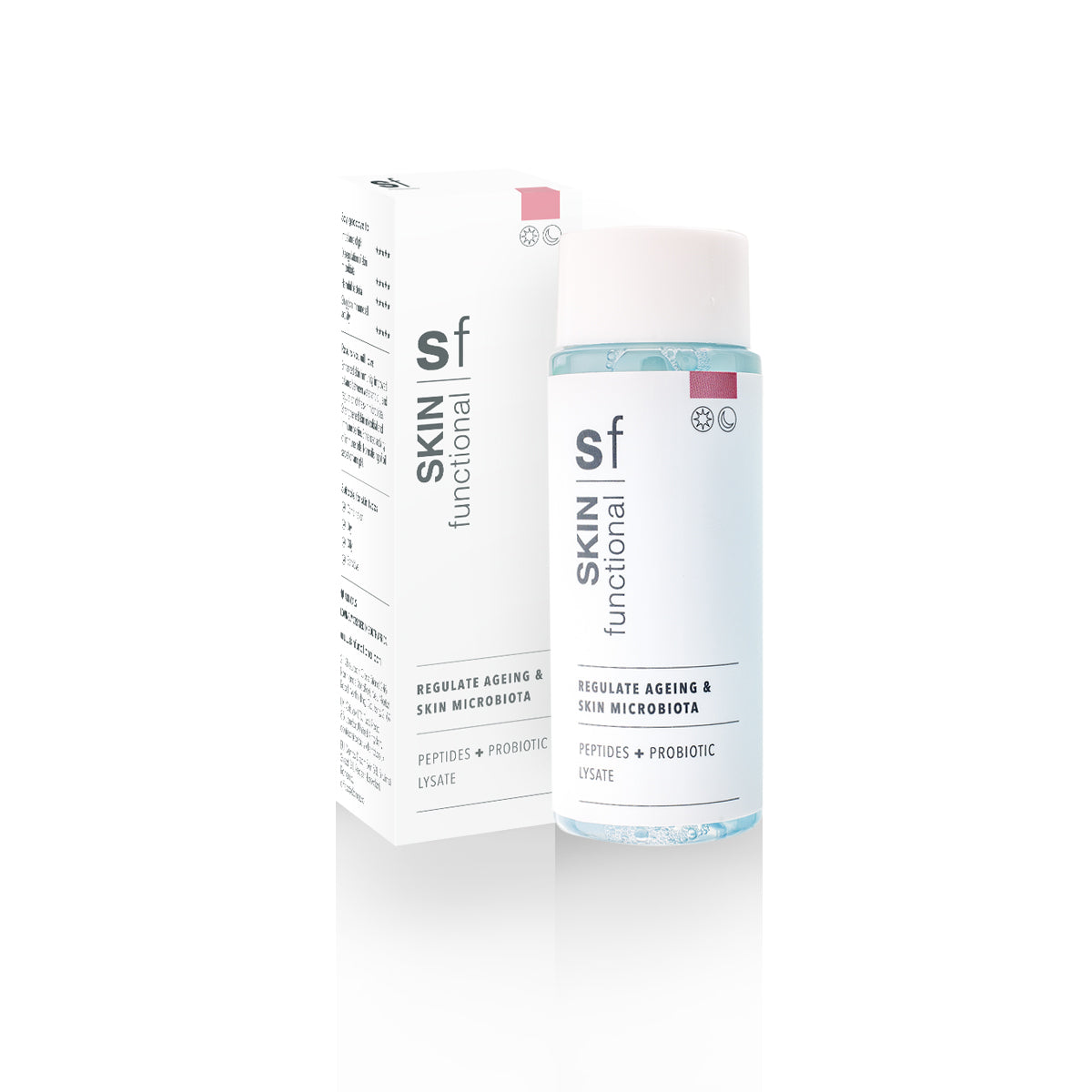
For men dealing with post-shave irritation, sensitivity from outdoor exposure, or general skin roughness, this ingredient is genuinely useful. It’s not a trend ingredient, it’s a functional one, and its inclusion in a formula like Peptides + Probiotic Lysate Tonic from SKIN functional is a strong indicator of thoughtful formulation.
What to Look for in the Best Peptide Tonic in South Africa
Not every product with “peptide” on the label is created equal. Peptides are expensive to source and stabilise, which means some brands use them at concentrations too low to have any real effect, essentially a marketing inclusion rather than a functional one. When recommending the best peptide tonic South Africa shoppers should consider, we look at a few non-negotiable criteria.
First, transparency. A brand that discloses concentration ranges or references ISO and EU formulation standards is one that’s confident in their formula. Vague ingredient lists with no context are a red flag. Second, formulation integrity, peptides are deactivated by certain ingredients (more on that below), so the rest of the formula matters as much as the peptide itself. Third, pH compatibility. Peptides are most stable and effective in a specific pH range, and a well-formulated product will be designed with that in mind.
For South African skin specifically, you also want a formula that accounts for our climate. High UV exposure accelerates the collagen breakdown that peptides are working to counter, so a tonic used in the morning should ideally sit comfortably under SPF. As a liquid tonic, the Peptides + Probiotic Lysate formula absorbs quickly without heaviness, making it well-suited to both dry inland and humid coastal conditions.
Ingredients That Work With Peptides, and What to Avoid
Peptides are compatible with most skincare staples. Hyaluronic acid is an excellent pairing, it supports hydration while peptides address structural concerns. Niacinamide works well alongside peptides, targeting uneven tone and oil control without interfering with peptide activity. Antioxidants like vitamin C can be used in the same routine, though it’s worth spacing them out (vitamin C in the morning, peptides in the evening) to ensure each ingredient is working at its optimal pH.
What you want to avoid using directly alongside peptides is strong acids, particularly high-concentration AHAs and BHAs. These lower the skin’s pH significantly, which can break down peptide bonds and reduce their effectiveness. If exfoliating acids are part of your routine (and for most men with texture concerns, they probably should be), use them on alternating evenings or at a different step, not layered directly over a peptide tonic.
Copper peptides deserve a special mention: they’re powerful but shouldn’t be mixed with vitamin C or retinoids, as the interactions can reduce the efficacy of both. If you’re using a formula with specific peptide types, check the brand’s compatibility guidance.

How to Build a Simple Men’s Routine Around a Peptide Tonic
The appeal of a great peptide tonic is that it anchors an entire routine without requiring ten other products. As a tonic, it’s applied after cleansing and before your moisturiser, which is the ideal step for delivering active ingredients to freshly cleansed skin. For most men, the goal is simplicity, something that works consistently without taking up twenty minutes morning and night. Here’s how we’d approach it.
Morning Routine
- Cleanser. A gentle, non-stripping face wash. Avoid anything with high concentrations of sulfates if you have dry or sensitive skin. A brief 60-second cleanse is enough.
- Peptides + Probiotic Lysate Tonic. Saturate a cotton pad and gently wipe across your face, neck and décolletage. The tonic format means actives are delivered efficiently to freshly cleansed skin before your moisturiser.
- Moisturiser. Apply your preferred moisturiser over the tonic once it has been absorbed.
- SPF. This is non-negotiable in South Africa. Apply a broad-spectrum SPF 30 or higher as your final morning step. UV exposure is the single biggest driver of collagen breakdown.
Evening Routine
- Double cleanse if needed. If you’ve been outdoors or worn SPF, a cleansing balm or oil first, followed by a water-based cleanser, removes everything properly.
- Peptides + Probiotic Lysate Tonic. Apply with a cotton pad as your first active step. This is where the barrier repair and recovery work begins.
- Active treatment (2–3 nights per week). This is where you’d use a gentle exfoliating acid, a niacinamide serum for oil control, or a retinoid if you’re working on fine lines. Alternate these rather than stacking them.
- Moisturiser. Apply your moisturiser as the final step to seal in everything applied before it.
Consistency over complexity. We’ve seen more results from men who use three products correctly every day than from those who buy twelve products and use them sporadically. Peptides especially need time, expect to see meaningful changes in skin texture and firmness after six to eight weeks of daily use.
Addressing Common Men’s Skin Concerns With the Right Tonic
Men’s skin concerns are specific, and they deserve specific answers, not generic skincare advice recycled from women’s beauty content. Let’s look at the most common issues and how a peptide and probiotic lysate tonic addresses them directly.
Post-shave irritation and redness:
Shaving disrupts the skin barrier every single day. Probiotic lysate helps restore that barrier quickly, reducing redness and the reactive sensitivity that can develop over time from repeated shaving without proper after-care. Applied immediately post-shave as a tonic (wiped over the face with a cotton pad), this formula acts as both a calming agent and a recovery booster.
Rough or uneven texture:
Peptides stimulate collagen production, which gradually improves skin density and smoothness. Combined with gentle exfoliation a few nights a week, most men see noticeable texture improvement within four to six weeks.
Ingrown hairs and shaving rash:
Ingrowns thrive when the skin is inflamed and the barrier is compromised. By keeping the skin calm and well-hydrated, a probiotic lysate tonic reduces the inflammatory environment that makes ingrowns worse. This isn’t a replacement for treating active ingrowns, but it significantly reduces recurrence.
Fine lines and early signs of ageing:
This is where peptides earn their reputation. Men’s skin is typically thicker than women’s, but it’s also often more neglected, meaning signs of ageing can appear more dramatically when they do show up. A consistent peptide routine started in the late twenties or thirties makes a real difference by the time you’re in your forties.
Oiliness and congestion:
This one surprises people, but a well-formulated peptide tonic doesn’t have to be heavy. The liquid tonic format delivers all the actives without clogging pores or contributing to breakouts, making it particularly well-suited to oily or congestion-prone skin types.
Conclusion
The Men’s Health Grooming Awards 2025 did something useful: they put a well-formulated, ingredient-led tonic in the spotlight at exactly the right moment. South African men are increasingly making smarter skincare decisions, choosing products based on what’s actually in the formula rather than what’s printed on the front of the box.
Peptides and probiotic lysate represent that smarter approach. They’re not trendy ingredients that will disappear next year. They’re functional, research-backed, and address real concerns, from shaving rash and barrier damage to fine lines and long-term skin health. And when they’re combined in a well-balanced tonic like Peptides + Probiotic Lysate Tonic from SKIN functional, the results speak clearly.
If you’re building a routine from scratch or looking to upgrade the one you have, start here. Use it after your cleanser, before your moisturiser, morning and evening. A single well-chosen product, used consistently, will outperform a cluttered bathroom shelf every time. That’s the lesson from this year’s awards, and it’s one worth taking seriously.