
Retinol serum has earned its reputation as the gold-standard ingredient for visible skin transformation, and for good reason. Whether you're battling fine lines that appeared overnight, stubborn post-inflammatory marks from old breakouts, or texture that no amount of exfoliating seems to smooth, a well-formulated retinol serum can shift your skin in ways few other actives can match. But the catch? Not all retinols are created equal, and using the wrong strength (or the wrong way) is one of the fastest routes to a flaky, irritated mess.
In this guide, we're cutting through the noise. We'll explain exactly what retinol is, what it does at a cellular level, how to choose the right concentration for your skin type, and how to slot it into a routine that actually delivers results. Consider this your evidence-first walkthrough, no hype, just the science and the steps.
What Is Retinol and How Does It Work?
Retinol is a vitamin A derivative, part of the broader retinoid family that also includes retinaldehyde, retinyl esters, and prescription tretinoin. When applied topically, retinol is converted by your skin into retinoic acid, the active form that communicates directly with skin cells and tells them to behave younger, faster, and more efficiently.
At a cellular level, retinol binds to specific receptors in the skin and accelerates cell turnover. That means dead, dull surface cells shed faster, fresh cells move up more quickly, and collagen production gets a meaningful nudge upward. Over weeks of consistent use, this translates to smoother texture, brighter tone, and firmer skin.
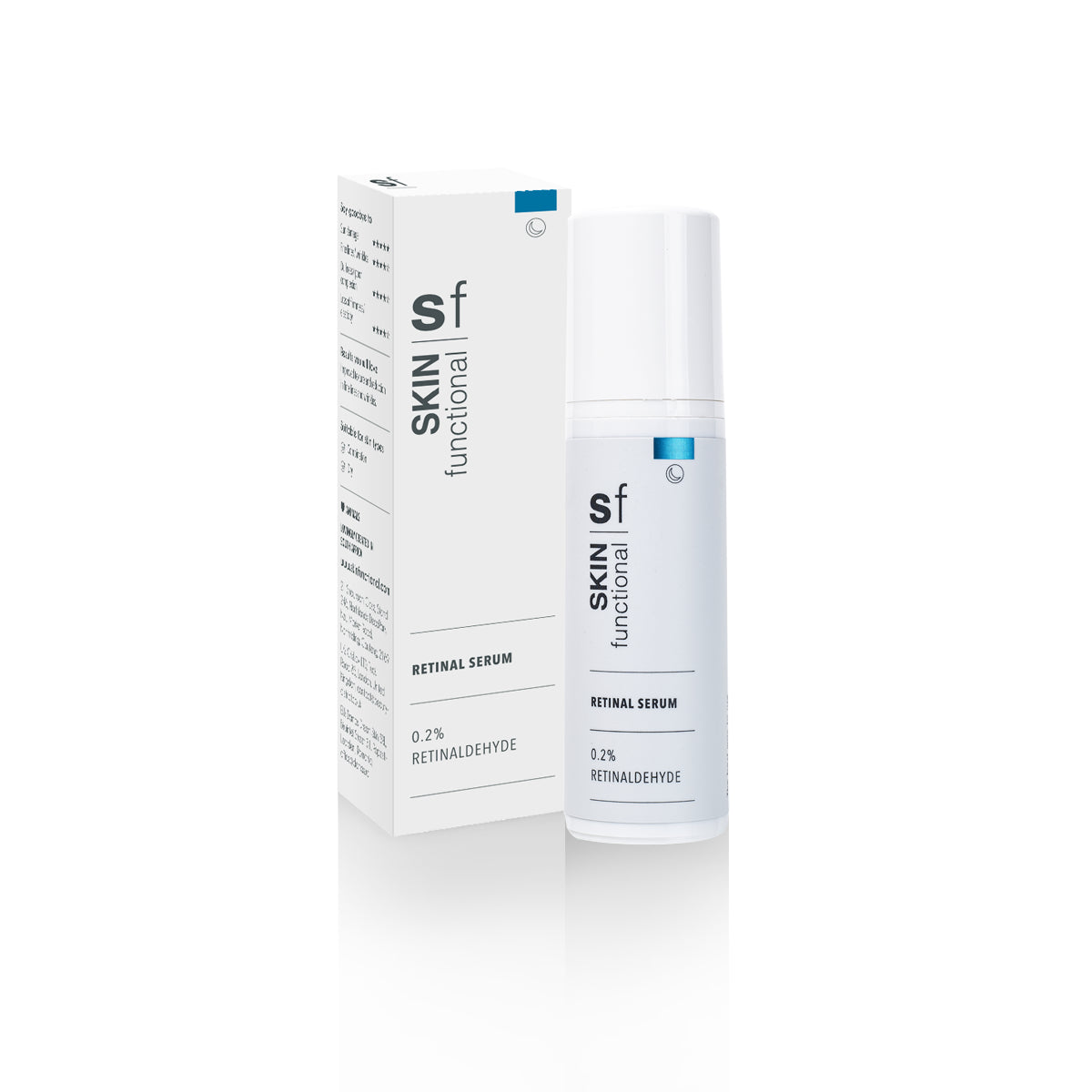
It's worth noting that retinol itself needs two conversion steps to become retinoic acid, while 0,2% Retinaldehyde only needs one, making it faster-acting and often gentler. Understanding where each form sits on this conversion ladder helps you pick the right one for your goals.
What Does Retinol Do for Your Skin?
So, what does retinol do for your skin in practical, mirror-visible terms? Quite a lot. Retinol is one of the most clinically researched skincare actives on the market, with decades of dermatological studies backing its effects on photoaging, acne, and pigmentation.
Here's what you can expect with consistent use over 8-12 weeks:
- Increased cell turnover, your skin sheds dead cells faster, revealing fresher skin underneath.
- Stimulated collagen and elastin production, the structural proteins that keep skin firm and bouncy.
- Reduced sebum output, which means fewer clogged pores and less surface oil.
- Faded hyperpigmentation, including sun spots, melasma, and post-acne marks.
- Refined pore appearance, pores look smaller because they're less congested.
In short, retinol doesn't just treat one concern, it addresses the whole spectrum of ageing and congestion at once, which is why it remains a non-negotiable in serious skincare routines.
Key Benefits of Using a Retinol Serum
The retinol serum benefits stack up across nearly every skin concern that ages or congests the face. Below, we've broken down the three biggest wins you can expect when you commit to consistent, well-paced use.
Reduces Fine Lines and Wrinkles
Fine lines around the eyes, mouth, and forehead are largely a collagen issue, and retinol is one of the few topical ingredients with strong clinical evidence for stimulating new collagen synthesis. By accelerating cell turnover and signalling fibroblasts to produce more structural proteins, retinol gradually softens the appearance of crepiness and etched-in expression lines. For users wanting a stronger push, 1% Retinol delivers a higher concentration suited to experienced retinol users.
Evens Skin Tone and Fades Dark Spots
If you're dealing with melasma, sun spots, or stubborn post-inflammatory hyperpigmentation, retinol speeds up the shedding of pigmented cells and disrupts the transfer of melanin to surface skin. Paired with a hydrating, gentler base like the 0,5% Retinol + 2% Bakuchiol formulation, you get pigmentation support without the harshness that can sometimes worsen marks.
Unclogs Pores and Clears Acne
Because retinol normalises how skin cells shed inside the pore lining, it stops the chain reaction that leads to comedones, whiteheads, and inflammatory acne. It's why dermatologists prescribe retinoids as first-line therapy for persistent breakouts.
How to Choose the Best Rated Retinol Serum for Your Skin Type
Choosing the best rated retinol serum isn't about grabbing the highest percentage on the shelf, it's about matching the form and strength to your skin's tolerance, your concern, and your experience level.
For beginners and sensitive skin: Start low and slow. A formula like 0,3% Retinol Oil Serum is ideal, it's gentle enough for skin that has never seen a retinoid, while still being effective.
For sensitive skin that still wants results: Consider 5% Hydroxypinacolone Retinoate Serum, a next-generation retinoid ester that binds directly to retinoic acid receptors with minimal irritation.
For intermediate users: Step up to 0,2% Retinaldehyde, which is roughly 11 times more potent than standard retinol but still well-tolerated by most.
For advanced users: 1% Retinol or the multi-molecular 1.5% Retinoid Complex deliver serious results for skin that's already retinised.
Match the molecule to the mission, that's the secret.

How to Add a Retinol Serum to Your Skincare Routine
Adding a retinol serum to your routine works best when you build it in gradually. Retinol is always a PM ingredient because sunlight degrades it and increases the risk of irritation.
Here's a simple framework:
- Cleanse with a gentle, non-stripping cleanser and pat skin fully dry.
- Wait 10-15 minutes. Applying retinol to slightly dry skin reduces irritation versus damp skin, which boosts absorption (and sting).
- Apply a pea-sized amount of retinol serum across the entire face, not just trouble zones.
- Follow with a barrier-supporting moisturiser containing ceramides, niacinamide, or panthenol.
- In the AM, always wear SPF 30+, non-negotiable.
Start with two nights per week for the first two weeks, then three nights for weeks three and four, and build to nightly use only if your skin tolerates it. Avoid layering retinol with AHA, BHA, or vitamin C on the same night during the first month.
Common Side Effects and How to Avoid Them
Even the best-formulated retinol can cause what dermatologists call the "retinisation" phase, a temporary period where skin adjusts to the increased cell turnover. Knowing what's normal versus what's a problem keeps you on track.
Common, expected side effects:
- Mild dryness or flaking around the nose and mouth
- Slight redness or pinkness for a few hours after application
- Temporary purging of underlying congestion (usually weeks 2-4)
- Increased sensitivity to sun
How to minimise irritation:
- Use the "sandwich method", moisturiser, then retinol, then moisturiser, for sensitive skin.
- Don't apply to wet skin.
- Skip exfoliating acids on retinol nights, especially while ramping up.
- Keep your barrier strong with hydrating, ceramide-rich products.
- Never skip SPF the next morning.
If you experience burning, persistent rash, or cracked, weeping skin, stop use, focus on barrier repair for two weeks, and restart at a lower frequency or strength.
Who Should Avoid Products With Retinol
While products with retinol suit most adults, there are clear scenarios where you should skip retinol or switch to a safer alternative.
Avoid retinol if you are:
- Pregnant or breastfeeding, vitamin A derivatives are not considered pregnancy-safe. Bakuchiol or azelaic acid are better-suited alternatives.
- Using prescription retinoids like tretinoin or adapalene, no need to double up.
- Mid-flare with active eczema, rosacea, or severely compromised barrier, restore the barrier first.
- About to undergo professional treatments such as waxing, laser, or chemical peels, pause retinol for at least 5-7 days beforehand.
- Under 18 unless directed by a dermatologist for acne management.
If you fall into any of these groups but still want anti-ageing or pigmentation results, bakuchiol-based formulas, peptides, and vitamin C are excellent stand-ins that deliver visible benefits without the retinoid risk.
The bottom line: retinol serum remains one of the most rewarding actives in modern skincare, when chosen carefully, introduced slowly, and supported by a barrier-friendly routine. Pick the right strength for your stage, stay consistent, and the results will speak for themselves.
Frequently Asked Questions About Retinol Serum
What is retinol serum and how does it work on skin?
Retinol serum is a vitamin A derivative that converts into retinoic acid when applied topically. It binds to skin cell receptors, accelerating cell turnover, boosting collagen production, and telling skin cells to behave younger and more efficiently, resulting in smoother texture and brighter tone.
How long does it take to see results from a retinol serum?
Most users see visible results within 8-12 weeks of consistent use. Initial changes include faster cell turnover and smoother texture, while deeper benefits like reduced fine lines and faded hyperpigmentation develop gradually over time with sustained application.
What retinol serum strength should beginners use?
Beginners should start with 0.3% retinol or lower concentrations, introducing it slowly at two nights per week initially. A gentler formula is effective and safe for skin new to retinoids, reducing irritation while building tolerance before advancing to higher strengths.
Can I use retinol serum if I have sensitive skin?
Yes, sensitive skin can benefit from retinol serum using the right approach: start with low concentrations like 0.3% retinol, use the sandwich method (moisturiser, retinol, moisturiser), and apply only 2-3 nights weekly. Consider gentler alternatives like 5% Hydroxypinacolone Retinoate for minimal irritation.
Is retinol serum safe during pregnancy?
No, retinol and vitamin A derivatives are not considered pregnancy-safe. If you're pregnant or breastfeeding, switch to safer alternatives like bakuchiol or azelaic acid, which deliver anti-ageing and pigmentation benefits without retinoid risks.
What should I do if retinol serum causes redness or flaking?
Mild redness and flaking are normal during the retinisation phase as skin adjusts. Minimize irritation by using the sandwich method, avoiding wet skin application, skipping exfoliating acids on retinol nights, and maintaining a strong barrier with ceramide-rich products and SPF 30+ daily.