

Hormonal acne in adults is managed by pairing a consistent topical routine with ingredients that target oil and inflammation, alongside steady barrier support. Most people see meaningful change in eight to twelve weeks. Where acne is severe, scarring or linked to other symptoms, a doctor should be involved.
If you are breaking out along your jaw and chin in your late twenties or thirties, and it feels like it arrived out of nowhere, this article is written for you. We will help you work out whether what you are seeing is actually hormonal, what is driving it, and which hormonal acne treatment products are worth your money. No scare tactics and no hormone panic, just what we have learned formulating for South African skin.
Key takeaways
- Hormonal acne clusters on the jaw, chin and lower cheeks in a cyclical pattern, usually flaring in the two weeks before your period.
- Most adults with hormonal acne have normal hormone levels. The issue is how sensitively your skin reads ordinary fluctuations, not a medical disorder.
- A consistent routine built on salicylic acid, niacinamide and azelaic acid typically shows results in eight to twelve weeks.
- Hormonal cystic acne sits deep under the skin. Do not squeeze cysts, as forcing them almost guarantees a scar or a lasting dark mark.
- Daily broad-spectrum sunscreen is the difference between a mark that fades in weeks and one that lingers for months, particularly on deeper skin tones.
What is hormonal acne?
Hormonal acne is acne driven by the way your skin responds to fluctuations in your reproductive hormones, particularly androgens. Androgens are a group of hormones, testosterone being the one most people have heard of, that both men and women produce. They tell the sebaceous glands, the small oil-producing glands sitting alongside each hair follicle, to make more sebum. More sebum, combined with dead skin cells, bacteria and inflammation, produces a breakout.
Here is the part the medical sites tend to skip. Having hormonal acne does not mean your hormones are out of balance. In most adult women, hormone levels sit inside the normal range. What differs is how sensitive the skin is to those hormones. Two women can have identical bloodwork and only one will break out. That is not a disorder, it is biology.
How to tell if your acne is hormonal or bacterial
This is the question that sends most women down a search rabbit hole, and the one nobody seems to answer clearly. Three things separate hormonal acne from bacterial or fungal breakouts: where it shows up, when it shows up, and how it feels under the skin.
Where it appears
Hormonal acne clusters along the lower third of the face. The jaw, the chin, the corners of the mouth, sometimes the lower cheeks and the front of the neck. There is an anatomical reason for it: the sebaceous glands along the jaw, chin and neck are more numerous and more responsive to androgens than those on the forehead or upper cheeks, so they react first and hardest. Bacterial acne scatters more widely across the T-zone and cheeks. If you draw an imaginary line from ear to ear along your jaw and most of your spots sit below it, you are probably looking at hormonal chin acne. This is also why a friend's forehead-focused routine has done nothing for your chin. You are not treating the same problem, and jawline acne causes in females are rarely about pillowcases or phone screens.
When it appears
Hormonal breakouts are cyclical. They build through the luteal phase, the roughly two weeks between ovulation and your period, and peak in the week before bleeding starts. If you can predict your breakouts from your calendar, that is a strong signal.
What it feels like
Hormonal spots sit deep. They are tender before you can see them, slow to surface and slow to clear. Bacterial breakouts feel more superficial, with whiteheads, pustules and visible congestion. Fungal acne, which is not really acne at all but a yeast overgrowth in the follicles, appears as uniform small bumps on the forehead, chest or back and often itches. Strong actives and benzoyl peroxide will make fungal breakouts worse, which is why identifying it correctly matters.
| Feature | Hormonal | Bacterial | Fungal |
|---|---|---|---|
| Location | Jaw, chin, lower cheeks | T-zone, cheeks, mixed | Forehead, chest, back |
| Timing | Cyclical, before a period | Any time | Worse in heat and sweat |
| Appearance | Deep, tender, few | Whiteheads, pustules | Uniform small bumps |
| Itches | No | Rarely | Often |
The types of hormonal acne
Not all hormonal breakouts look the same. The main hormonal acne types are inflammatory papules, which are small red bumps, nodules, which are larger and firmer under the skin, and cystic lesions. Hormonal cystic acne is the most difficult of the three: deep, painful, pea-sized bumps that never properly surface. Do not squeeze them. Cysts sit too deep to extract and forcing them almost guarantees a scar or a dark mark that outlasts the spot by months.
What causes hormonal acne in adult women?
The short answer to what causes hormonal acne is shifts in the balance between your reproductive hormones, and how sensitively your skin reads those shifts. Adult acne in women rarely has one single trigger.
Through the first half of your cycle, oestrogen dominates, and oestrogen is broadly good news for skin. It supports collagen and keeps oil production in check. After ovulation it dips, and in the final week before your period the relative influence of androgens climbs. That is the window when sebum production increases, pores clog and the deep, tender bumps arrive.
Stress compounds it. Cortisol, the main stress hormone, prompts the adrenal glands to produce more androgens, which is why a punishing work week and a breakout often arrive together. Coming off hormonal contraception, changing it, or approaching perimenopause can rearrange the same hormones and set off a fresh wave of adult acne, sometimes in women who had clear skin for a decade.
When to see a doctor
Most adult hormonal acne is not a sign of a medical condition. Sometimes it is, and knowing the difference is worth more than any product recommendation.
Polycystic ovary syndrome, usually shortened to PCOS, is a common endocrine condition that can cause persistent acne alongside irregular or absent periods, unwanted hair growth on the face or body, and difficulty losing weight. If that pattern sounds familiar, see a GP or gynaecologist. Diagnosing PCOS involves bloodwork and sometimes a scan, and it is not something a skincare brand can or should attempt. The same applies to thyroid conditions and other endocrine causes.
Book an appointment if you are scarring, if acne has not responded to a consistent topical routine after three months, if it comes on suddenly and severely, or if it appears alongside irregular periods or unusual hair growth. Prescription treatments for hormonal acne exist and they work well for many people. That conversation belongs with a doctor rather than with us. We can help calm your skin. We cannot tell you what your hormones are doing.
How to treat hormonal acne
You cannot stop your cycle, but you can make your skin less reactive to it. The most useful shift is treating the luteal phase before it breaks you out, rather than after the first cyst appears.
Salicylic acid
Salicylic acid is oil-soluble, which means it can move through sebum and into the pore to clear the plug before it becomes a spot. Using salicylic acid a few times a week from around ovulation onwards, rather than reactively once you have broken out, changes the outcome for a lot of women.
Niacinamide
Support with niacinamide daily. It helps regulate oil, calms redness and strengthens the barrier so your skin can tolerate the actives you need it to tolerate.
Azelaic acid
Add azelaic acid if post-inflammatory hyperpigmentation, the dark marks that outlast the spots themselves, is part of what is bothering you. It is anti-inflammatory and helps those marks fade over time.
Retinoids
Retinoids increase cell turnover and help prevent the next cycle of congestion forming. They are also the most irritating option here, so build up slowly rather than starting nightly. Whichever actives you choose, give the routine eight to twelve weeks before deciding it is not working. Anything promising to fix hormonal acne in a fortnight is selling you something.
Diet, stress and daily habits
We have to be honest here, because a lot of the internet is not. The research linking specific foods to acne is suggestive rather than settled. There is reasonable evidence that skim dairy and very high-glycaemic diets, meaning plenty of sugar, refined carbohydrates and sweet drinks, can worsen acne in some people. There is no good evidence that cutting out gluten, nightshades or any other single food group will clear your skin.
So the sensible hormonal acne diet is not a diet at all. Notice whether your skin reacts to skim milk specifically, as full-fat dairy appears less implicated, and steady your blood sugar with meals built around protein, fibre and slower carbohydrates. Do not cut whole food groups on the strength of a wellness blog. Restriction carries its own costs and there is no evidence it fixes hormonal acne. We do not recommend supplements for acne.
The unglamorous habits matter more than we would like. Sleep. Clean bedding. Not touching your face. Not over-washing inflamed skin, which strips the barrier and makes everything angrier.
Building a routine for hormonal acne in South Africa
Most advice on this topic is written for northern-hemisphere skin, and it misses two things that matter here.
Our UV levels stay high all year, including through winter and on overcast days. Post-inflammatory hyperpigmentation is also more persistent on medium to deep skin tones, which describes most South African skin. Together that means the marks left behind by a breakout are often the longer-lasting problem, outlasting the spot by months. Broad-spectrum sunscreen every single morning is the difference between a mark that fades in weeks and one that is still there at Christmas. If you take one thing from this article, let it be that.
The second factor is how much our climate varies. Dry highveld winters and humid coastal summers ask different things of the same skin. A routine that felt balanced in Johannesburg in July can feel heavy in Durban in January. Adjust the moisturiser rather than abandoning the actives.
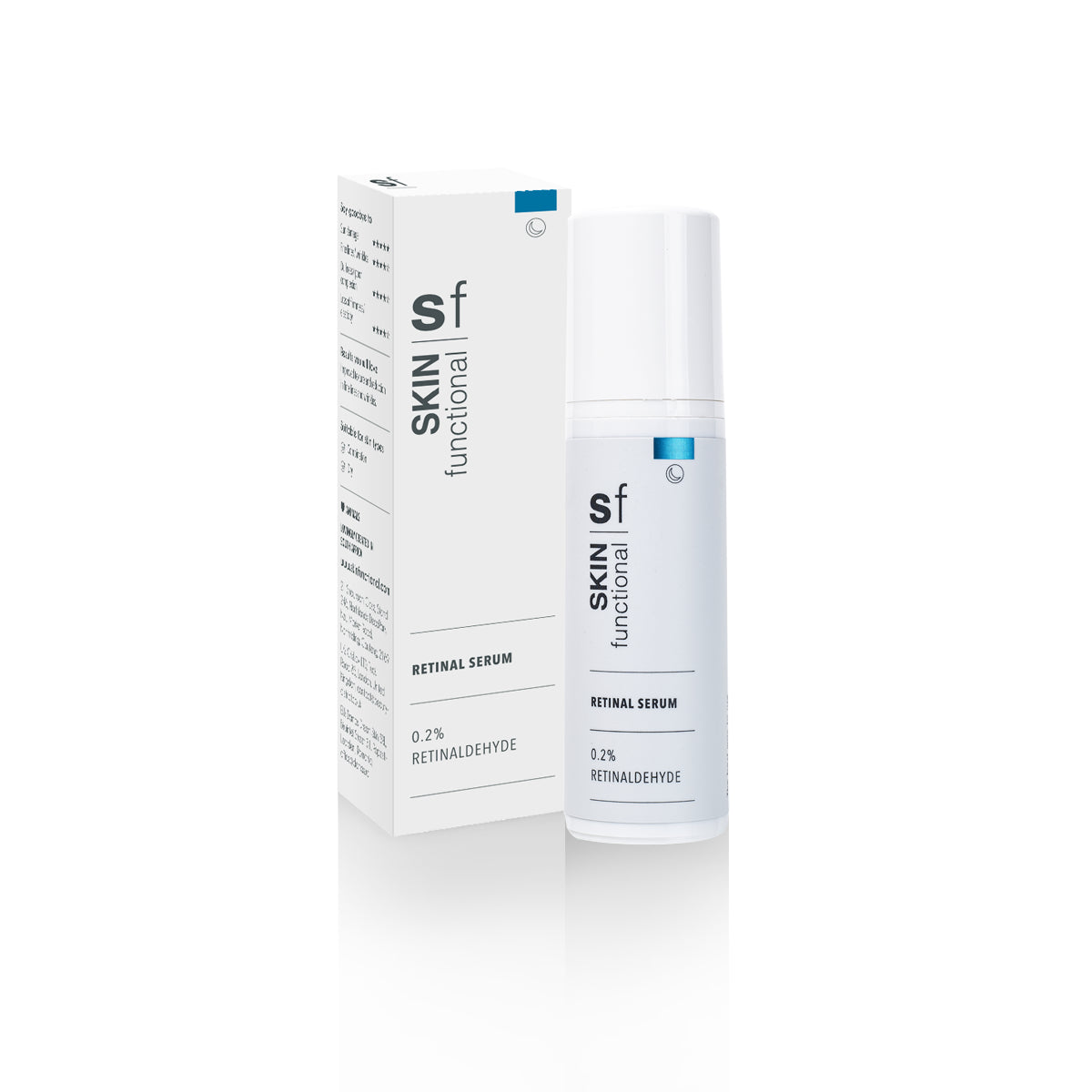
A workable starting routine for acne-prone skin: cleanse with the Salicylic Cleansing Complex, apply the 10% Azelaic Acid Serum at night, moisturise, and wear broad-spectrum sunscreen every morning. Then give it three months before you judge it.
Explore the full range formulated for breakout-prone skin in the acne collection.
Frequently asked questions about hormonal acne
How do I know if my acne is hormonal?
Hormonal acne clusters along the jaw, chin and lower cheeks, tends to be deep and tender rather than surface whiteheads, and flares cyclically in the week or two before your period. If your breakouts follow that pattern, hormones are likely the main driver. Scattered T-zone spots appearing randomly are more often bacterial or congestion-related.
Why am I getting acne on my chin and jawline?
The sebaceous glands along your lower face are more numerous and more sensitive to androgens than those on your forehead. When androgen activity rises in the second half of your cycle, those glands produce more oil, pores clog and deep spots form. That is why chin and jawline breakouts are the signature pattern of adult hormonal acne.
How long does hormonal acne take to clear?
With a consistent topical routine using actives such as salicylic acid, niacinamide, azelaic acid or a retinoid, most people see visible change in eight to twelve weeks. Full clearing can take longer, and post-inflammatory marks fade over months. Anyone promising faster results is overselling. Hormonal acne is slow, and steady beats aggressive.
Can hormonal acne go away on its own?
Sometimes it does, particularly once perimenopause settles or when a significant life stressor resolves. More often it persists for years if left alone, and untreated cystic breakouts carry a real risk of scarring. A gentle, consistent routine will not force it away, but it reduces severity and protects your skin from long-term marking.
Does hormonal acne mean something is wrong with my hormones?
Usually not. Most women with hormonal acne have hormone levels within the normal range, and their skin is simply more sensitive to ordinary fluctuations. That said, if acne arrives alongside irregular periods, unusual hair growth or sudden severe onset, see a doctor to rule out conditions such as PCOS or a thyroid issue.
What is the difference between hormonal acne and fungal acne?
Hormonal acne appears as deep, tender spots on the jaw and chin, flares cyclically and does not itch. Fungal acne is caused by yeast overgrowth in the follicles, looks like uniform small bumps on the forehead, chest or back, and often itches. Using strong acne actives on fungal acne makes it worse, so the distinction matters.